
Calm, Clarity, and Confidence
At home and at work
86%
of all clients reported improvements. For those completing at least 6 sessions: 95%.
improvement in wellbeing scores over 6 sessions (1-10 scale). Equivalent to at least £26,000 per person of Social Value, according to UK Govt. measures.
+2.1
81%
of clients reported more positive thinking (+2.3 points)
79%
reported greater confidence (+2.2 points)
80%
reported increased happiness (+2 points)
Hypnotherapy for Calm, Clarity, Confidence and Control
I'm Adam Pearson, and I offer Solution Focused Hypnotherapy in Newquay and online, for individuals, groups, adults and children.
Hypnotherapy can be really helpful for confidence and performance, stress and anxiety, fears and phobias, IBS, habits, motivation and mood.
86% of people experience significant improvements.
It's a natural process based on brain science and relaxation, helping you to feel calm, confident and in control, so you can live your life and achieve what you want.

I also offer hypnosis audios and other resources, many for free.
You can access them here.
What hypnotherapy can help with
Hypnotherapy for your mind:
-
Hypnotherapy can be really helpful for confidence.
We all have, somewhere inside us, thoughts and ideas of what we enjoy and what we are capable of. When these ideas become less accessible, often through stress, it can erode our confidence. When this happens, it can be really helpful to relax, to return to a state of calm, to reflect and remember times when we have felt confident.
What is confidence?
Confidence is a natural state of positive self-belief, which brings about many positive results and states. Confidence brings with it positive thoughts, as well as positive feelings, emotions and actions. It also gives us control. When we are confident we feel good and perform to the best of our abilities. Confidence can be blocked or subdued by stress, and sometimes needs nurturing, developing or releasing. This can be a very enjoyable, beneficial and exciting process.
"Adam has helped me to get out of a life-long problem with self confidence. I respond differently now to challenges and problems - just get on and solve them, in a relaxed, calm way."
"I thoroughly enjoyed every session, and the effect has lasted, and will continue to last."What are the signs and benefits of confidence?
Confidence is a natural state which I believe has evolved to make us successful. When we are confident, we are brave. We cope brilliantly with all sorts of challenges. We relish challenge, and we end up wanting more. Our comfort zone expands. Our posture improves. Our immune system and our muscles become naturally strong.
When we are confident we achieve more of what we want. As our confidence grows it becomes easier to feel calm. And when we feel calm our confidence grows. This gives us control, and choice. And so it continues.How does hypnotherapy help with confidence?
Hypnotherapy helps by calming down the natural stress responses that can get in the way. During the process we will talk about what it feels like to be confident, what it looks like, what it has been like when you have been confident, and what it will be like when you are. Hypnosis helps learning at a subconscious level, which makes it an easy, powerful and enjoyable process.
"Adam has helped me change some deep rooted thinking and given me the confidence to do the things I want to and believe in myself."
"I come out of every session with my spirits lifted and knowing that it's ok to be me!! Fab! Thank you." -
Hypnotherapy can be really helpful for anxiety and the good news is, while it can come on fast, anxiety can also go away. Many of my clients see a marked improvement in the first week and feel much better after a short series of sessions. And the improvements are lasting.
"I can't believe what a difference it's made, and in such a short time."
What is anxiety?
Anxiety is a natural response to perceived or imagined risk. It's part of our natural "Fight or Flight" response. Sometimes it's entirely appropriate and helps to focus our attention. However it can gradually increase, sometimes without us noticing, until it gets to a level which doesn't match what's actually happening.
The fight or flight response is only ever trying to help, but part of its job is to assume the worst - so it can be really negative. The good news is there are really good things we can do about it. With the right support, recovery from anxiety can be really successful, and life-changing.What are the symptoms of anxiety?
Anxiety can affect our thoughts, our feelings and our behaviours. The emotions include worry, dread and fear. The feelings include sensations such as tightness in the chest, dizziness or nausea. There are often physiological changes too, like shallow breathing and increased heart-rate. Our thinking can become clouded, it gets really hard to think straight, and the impact on our behaviour is usually to avoid things or get out of there, or feel like we're going to pass out completely. It can be really horrible and many people report feeling like they are going to die.
Some people experience anxiety in relation to social situations or contact with other people. Others feel generally anxious. It can sometimes seem to be better or worse at certain times of day. The good news is - it doesn't need to be this way.How does hypnotherapy help with anxiety?
Hypnotherapy helps by calming down the natural stress responses that lead to anxiety. We do this partly by talking - we generally start off by talking about the brain, how it does anxiety and what we can do about it. Conversations then move on to positive things, like things you enjoy, times when the anxiety wasn't there, and imagining what it will be like in the future, when it's gone.
Then we have hypnosis, which is also enormously helpful. Hypnosis helps us to relax our stress responses and to activate instead our natural states of calm relaxation. These are also known as 'rest and digest' and 'tend and befriend'. We all know how to do these. There are a number of techniques we can use, but generally it's more natural and straightforward than people might imagine. Overall it's a really easy and enjoyable process. -
Hypnotherapy helps by calming down our natural fight or flight responses.
People come to see me for anger management or to help them not to feel so angry in the first place. Hypnotherapy can really help with anger because anger is a stress response, and hypnotherapy is really good for relieving stress - even stress that we didn't know we had.
What is anger and why am I getting angry?
In some situations anger is a very valid, appropriate and helpful emotional response. It enables us to stand our ground, stand up for what we think is right, and to assert ourselves. In more primitive times it would have enabled us to fight our enemies and to ward off dangerous animals.
Physiologically, anger can give us strength, determination and focus, at least in short bursts. In the longer term it can raise our blood pressure, lead to really unhelpful behaviours, and have detrimental effects on our health and happiness.Symptoms of inappropriate anger can include:
High blood pressure
Mucle tension, pain and headaches
Angry outbursts
Relationship and communication issues
Substance abuse
Self-harm
Feelings of guilt and low self-esteem
How can hypnotherapy help with anger?
Hypnotherapy helps by calming down our "fight or flight" stress responses, in particular, the fight. Anger is a natural, sometimes appropriate capability we all have. But like any instinctive survival response, it can get activated when it's not appropriate. This happens all the more when we are stressed. That's when hypnotherapy can be really helpful.
Through hypnosis, people who find themselves having angry outbursts, or just getting more heated than they know they need to, can often find more sensible ways of feeling and behaving. This is really good for their health, and for their interactions and relationships."I just seem to be responding much more calmly to things which might have triggered me before."
-
Improve your mood and energy with hypnotherapy.
Whether overcoming low mood or motivation, or interrupting negative thoughts, hypnotherapy can help you get back to your old self, or an even better version.
Hypnotherapy can be really helpful for alleviating low mood, dark thoughts, low energy and a lack of motivation. People who have experienced a loss of interest in things, even things which they used to love doing, can find relief and a rekindling of interest through hypnotherapy.
Solution Focused Hypnotherapy is a nice, easy and relaxing process, which is really helpful when our resources are down. It can take a little time to get positive energy and thoughts flowing, but going at the right speed and with the right support, people who have suffered with depression can and do get back to a full, fulfilling and happy life.What is depression?
Depression is different for different people, but can have a very negative impact on people's lives, sometimes over a very long period of time. It can happen in very different contexts, and to very varying degrees. There are many different treatments that can help.
Symptoms of depression
Depression can have wide-ranging and complex mental and physical symptoms, and can impact people's social activities and behaviour. Symptoms which hypnotherapy can help with include:
Low mood
Negative thoughts
Loss of interest in activities and hobbies
Lack of energy
Sleep and tiredness
Avoiding social contact or interaction
How can hypnotherapy help with depression?
Hypnotherapy helps by relaxing the natural protective responses often known as the fight/flight/freeze. Depression can be part of the 'freeze' response. With gentle support and a calm, measured approach, focusing on positives and gently taking focus off more negative things, Solution Focused Hypnotherapy can help people build up their energy and enthusiasm and find their spark again.
"My wife is so happy to have her husband back."
-
Whether you want to enjoy driving, flying, looking forward to your holiday, or interacting confidently with needles, dogs, other animals, or anything else that terrifies you - hypnotherapy is here to help.
I first got in to hypnotherapy when a colleague of mine complained of not being able to fly. By coincidence someone had just taught me a phobia-curing technique, so I offered to try it. It worked a treat, and that's how I became a hypnotherapist!
Having initially stated that she "didn't fly" this person became full of confidence and on her next journey was helping other passengers onto the plane. It was quite amazing. But most excitingly, it made her wonder what else in her life she could achieve that she hadn't considered yet.What is a fear and what's a phobia?
Fears and phobias are a little different although both take energy and get in the way of people achieving what they want. Both are essentially a survival response, designed to help us avoid danger.
Phobias are often defined as a fear response having significant symptoms which interrupt life on a daily basis. A phobic response can be quite extreme and really unpleasant, with significant consequences.
A phobia can be general e.g. social phobias or agoraphobia, which can apply in lots of different places or situations. Emetophobia can be felt in relation to different aspects of being sick, or other people being sick. Some phobias can be more specific, like a fear of flying, or of dogs, although even these can have very particular different aspects for different people. A flying phobia is sometimes about control, but sometimes about enclosed spaces. Some people are extremely specific with their fears, which is quite clever really! A fear of perfectly round objects is as ingenious as it is unhelpful.
Some people get really good at it, because it's a learning process! Which is good news, because all types of fear can be effectively unlearned, provided people are willing to open their minds and look forward to life without the fear. Hypnotherapy really helps with this."I had a terrible fear of spiders, and now handle them calmly and with compassion, whenever I need to."
What are the symptoms of a phobia?
A phobia can be defined as extreme aversion to something which interferes with daily life and persists for a long time. Symptoms can include:
Extreme panic
Avoidance
Nervousness and anxiety in anticipation of events or encounters
Nausea and sickness
Unhelpfully, emetophobia seems to quite often lead to the sufferer feeling sick. Some phobias are surprisingly common. 1 in 6 people have an animal phobia. 1 in 7 have a fear of flying. I'm working on it! These people often say (or their partners might), "It's silly" or "It's ridiculous!" - that doesn't help. Hypnotherapy does.
"I achieved my goal of travelling on a succession of buses and planes, with no sickness, nothing!"
How can hypnotherapy help with phobias?
A life that's free from inappropriate fear is achievable, and providing general stress levels can be brought under control, it doesn't need to take very long. Hypnotherapy can help with spiders, dogs, needles, health anxieties, seaweed ... The list is endless, but so are the possibilities, once the fear is gone.
Specific phobias can be effectively and permanently addressed, often in four sessions. Done properly, it can be a permanent and very positive change. It's not unusual to hear people say:"I wish I'd done this earlier. It's amazing. Freedom!!"
-
How to Achieve Calm in Extraordinary Circumstances:
It is not the events in life that cause stress. It is only our response to them. It's easy to say. But it's important to accept. And the good news is, we can do something about stress. There are things we can control.
"I can't believe what a difference it's made, and in such a short time."
What is Stress?
Stress is a natural response to perceived or imagined risk. It's part of our natural "Fight or Flight" response. Sometimes it's entirely appropriate and helps to focus our attention. However it can gradually increase, sometimes without us noticing, until it gets to a level which doesn't match what's actually happening.
The fight or flight response is only ever trying to help, but part of its job is to assume the worst - so it can be really negative, and unhealthy, physically and mentally. The good news is there are really good things we can do about it. With the right approach, managing stress can be really successful, and life-changing.What are the symptoms of Stress?
Stress can affect our thoughts, our feelings, our behaviours and our physical health. The emotions include worry, dread and fear. The feelings include sensations such as tightness in the chest, dizziness or nausea. There are often physiological changes too, like reduced immune-system functioning, shallow breathing and increased heart-rate. Our thinking can become clouded, it gets really hard to think straight, and the impact on our behaviour is usually to avoid things or lose interest and energy. The good news is, it doesn't need to be this way.
How does hypnotherapy help with stress?
Hypnotherapy helps by calming down the natural stress responses. We do this partly by talking - we generally start off by talking about the brain, how it does anxiety and what we can do about it. Conversations then move on to positive things, like things you enjoy, times when the anxiety wasn't there, and imagining what it will be like in the future, when it's gone.
Then we have Hypnosis, which is also enormously helpful. Hypnosis helps us to relax our stress responses and to activate instead our natural states of calm relaxation. These are also known as 'rest and digest' and 'tend and befriend'. We all know how to do these. There are a number of techniques we can use, but generally it's more natural and straightforward than people might imagine. Overall it's a really easy and enjoyable process."I haven't felt like this for a very long time. If ever.”
-
Pretty much everyone I see has issues with their sleep, even if it's not the main reason they've come to see me. The good news is it's very often one of the first things to improve.
Many people return after the first week and report having slept better. A very common and wonderful thing I hear is:"I haven't slept this well for a very long time"
It can happen, and it does.
What is insomnia and why am I not sleeping?
One of the first things to suffer when we are stressed is our sleep. Our perception is also affected and many people sleep better than they think they do. It turns out that worrying about sleep is worse than not sleeping - people who worry about being tired in the morning feel more tired, even if they have slept well. So sometimes sleep problems are ... in our heads … which is a good thing, because we can do something about that.
Naturally, when we are worried it can make it hard to sleep. Sometimes the stress is unconscious and we can't understand why we are not sleeping. This is why hypnosis can be really helpful. We don't need to know what the stress is - we can still get rid of it.What are the symptoms?
95% of my clients report having significant issues with their sleep. A very typical pattern is waking up between 2 and 4 am, and not being able to get back to sleep, and perhaps worrying, and feeling quite miserable.
Some people have trouble getting off to sleep because their mind is racing. Others feel groggy in the mornings. People with chronic insomnia can feel like they frequently lie awake for most or all of the night and don't sleep at all. Hypnotherapy can help.How does hypnotherapy help with sleep?
I usually give clients a relaxation audio session to play at home when it's time to go to sleep. This is designed to help them get into a better sleep zone, and can really help to get their sleep patterns back under control.
It turns out that positive thinking and positive expectations are both really good for sleep, and even people who aren't sleeping feel better if they don't worry about it. Hypnosis can help us achieve the benefits of sleep and to wake up feeling refreshed and ready for the day.
Hypnotherapy for your life:
-
Confident communication can be a joy.
Communicating is such a valuable thing to do and can be so satisfying, even for people who aren't natural speakers. I love helping people to speak, whether on the podium, the shop floor or at networking events.
Here's what Laura Whyte, Managing Director of Accountancy firm Whyfield has posted about her journey. You can see the post on linkedin."Adam has changed my life. I've learned why my body went into flight mode and we’ve ‘reprogrammed’ how my brain thinks about public speaking."
What issues do people have with public speaking?
For some people speaking in front of people can raise quite primal fears. That's natural enough, given that we have evolved to be aware of ourselves and other people. But there are much bigger and more sensible parts of our brains that know how valuable (and enjoyable) it can be.
Unchecked, the more primitive, emotional parts might cause the following symptoms:Imagining things going wrong
Feeling hot and sweaty
Cloudy thinking
Avoidance
Anxiety leading up to events
Fortunately there is only one thing that causes the perception of risk in our minds, and it's not out there in the audience or in anyone else's head...
How can hypnotherapy help with public speaking?
Hypnotherapy helps us to regain control of our thoughts and our emotions. When we do this, it feels good, and it gets easier and easier. You might even find yourself enjoying it. With the Solution Focused approach, we don't need to understand what's going wrong. We can focus on what it's like when it's amazing.
"I have had 2 great occasions where I’ve been invited to speak over the last week and I almost don’t recognise myself! I may even go as far as to say I’ve enjoyed it!"
-
When we are calm, we are in control and can naturally make good choices.
Hypnotherapy can help people to make positive choices more easily. Will-power is helpful, but it’s a finite resource.
Most people know what choices are good for them, and it is so much easier to make good choices once any stress responses have been calmed down. Hypnotherapy is really good for this."Before I saw Adam I felt as if my life was out of control, wasting time on negative habits instead of using it for the more important and pleasurable things in life."
What sort of habits can hypnotherapy help with?
The most well-known habit hypnotherapy helps with used to be smoking. These days there are far fewer smokers in the world, which proves that for many people it can be easy to quit.
Hypnotherapy can also be really helpful for:
Drinking
Drug misuse
Eating
Exercising
Nail-biting, skin-picking
Trichotillomania (hair-pulling)
Negative thinking
Can hypnotherapy help with addictions?
Addictions are just really well-developed habits, reinforced sometimes by chemical, physical, psychological and social factors. All of these can change, if people really want them to. The three most important factors in helping with addictions are:
Does the person really want to stop
Are the person's stress levels under control
Can they be sober and clean during the period of our work together
Once the answer to these is yes, then there's a good chance hypnotherapy can help.
How does hypnotherapy work for habits and addictions?
Part of the hypnotherapy process involves understanding the brain science and neuro-chemistry behind habits and behaviours. This is knowledge that will stay with you forever, and be really helpful. This alone can change people's perspectives in very helpful ways.
Solution Focused Hypnotherapy is also a really enjoyable process, helping people to focus on positive forces for change, and the things they really enjoy. When we are positive and relaxed, our brains make the good, healthy choices we know we are all capable of. There is hope."If you need help in sorting out your priorities and knocking destructive habits on the head. Go and see Adam. I cannot recommend him highly enough."
-
Hypnotherapy is now one of the best-researched treatments for Irritable Bowel Syndrome and is recommended by NHS guidelines.
There are often several contributing factors with IBS, which makes it hard sometimes to figure out what to do about it. However stress is often a major factor, and reducing stress does seem to help in a lot of cases, sometimes dramatically so.
"I can't believe what a difference it's made, and in such a short time."
What is Irritable Bowel Syndrome?
Irritable Bowel Syndrome, or IBS, involves symptoms including abdominal pain, bloating and unpredictable bowel movements. It is quite common, but many people suffer in silence. Women are diagnosed slightly more than men. It can cause a lot of pain and distress and can have a significant negative impact on people's lives, confidence and routines.
However it is now very well researched and most people with IBS can fully recover or at least learn to manage it better and experience much less pain and inconvenience."I can now leave the house with confidence."
Symptoms of Irritable Bowel Syndrome
Symptoms can be really unpleasant and inconvenient, including:
Confidence getting out and about
Lifestyle impacts e.g. constantly planning / worrying where the nearest loo might be
Bouts of severe abdominal pain
Diarrhoea and constipation
Bloating
Tiredness and depression
Embarrassment
How can hypnotherapy help with IBS (Irritable Bowel Syndrome)
Reducing stress can have a major impact on IBS symptoms and this is a major part of the treatment, with lots of other spin-off benefits like improved sleep and confidence. Where appropriate we can also use specific techniques known as "Gut-directed Hypnotherapy" which can address some of the issues more directly. Most often we will use a combination of the two.
And the good news is, most people (70%) respond well to hypnotherapy. Response rates are even higher for women and children. In the majority of cases people see improvements across all of their symptoms, including the anxiety and lifestyle impacts as well as the physical symptoms."I haven't felt this comfortable for a very long time.”
-
A tune-up for your mind.
Take care of your mind like you take care of your car
Life can feel like a race sometimes, and just as your car needs regular check-ups to stay on the road, so your mind deserves the same care and attention. A Mind MOT is a simple, powerful way to check in with yourself, to reset, and refocus.
This isn’t about fixing something that’s broken - it’s about:
Building on what's working
Tuning and aligning
Removing areas of clutter or stress
Strengthening emotional resilience
Building tools to help you feel calmer, clearer, and more in control
If you could increase your performance easily by 10, 20, 30%, how much more could you achieve?
Who Is It For?
Successful people facing opportunities which demand the best of them
Managing stress or juggling priorities
Professionals who want to be more present at home
People wanting a clearer sense of direction
"I can't believe what a difference it's made, and in such a short time."
What Does It Involve?
A typical MOT involves a series of four hypnotherapy sessions, but your Mental MOT is tailored to you. We can start by scheduling a free 20 minute chat.
Here’s what you can expect in your MOT:
1. A guided exploration of your thoughts, emotions, and habits
2. Simple tools, knowledge and techniques to boost your mental clarity and wellbeing
3. Hypnosis and self-hypnosis to deeply relax and reprogramme the unconscious parts of your mind and body.Ready to book your Mind MOT?
How does hypnotherapy work?
Hypnotherapy helps by calming down the natural stress responses that lead to anxiety. We do this partly by talking - we generally start off by talking about the brain, how it does anxiety and what we can do about it. Conversations then move on to positive things, like things you enjoy, times when the anxiety wasn't there, and imagining what it will be like in the future, when it's gone.
Then we have Hypnosis, which is also enormously helpful. Hypnosis helps us to relax our stress responses and to activate instead our natural states of calm relaxation. These are also known as 'rest and digest' and 'tend and befriend'. We all know how to do these. There are a number of techniques we can use, but generally it's more natural and straightforward than people might imagine. Overall it's a really easy and enjoyable process. -
For intrusive thoughts or routines, or unhelpful fears - hypnotherapy can help.
Hypnotherapy for OCD (Obsessive Compulsive Disorder)
Hypnotherapy can be very helpful for people living with OCD. It helps to change thoughts and manage behaviours in more positive ways. It's important to speak to a doctor too as there may be other treatments, and early diagnosis really helps, particularly with young people.
What is OCD?
OCD is a condition where obsessive thoughts and/or compulsive behaviours interfere with someone's daily life. The unwanted thoughts and behaviours are driven by the survival parts of the brain and usually feel right and feel important. Hypnotherapy works by calming down these parts and allowing people to explore options.
What are the symptoms of OCD?
People experience different types of OCD including:
Worrying about death and dying, either themselves, or others. Referred to as "Pure O".
Repetitive, intrusive and unwanted thoughts
Rechecking things (e.g. doors, windows, switches, cookers).
Repetitive habits e.g. hand-washing, arranging, counting, cleaning
Avoidance of items or places for fear of contamination
How does hypnotherapy help with OCD?
Hypnotherapy helps to relax the unconscious, protective parts of our minds and make it easier to explore and accept new ways of thinking and behaving. It is not usually a case of getting rid of the OCD, but of learning to manage it better.
-
Hypnotherapy is good for relationships.
Hypnotherapy can be really helpful for improving behaviours, attitudes and communication within a relationship. We all have patterns and triggers which can get in the way of good communication, and naturally in our close relationships these can come to the surface, and sometimes get in the way.
Hypnotherapy gives us access to more flexible, open and compassionate states of being, where we can see different perspectives and options. Relationships are a prime example of how problems can get really complex, but fortunately the solutions don't need to be. When we soften and relax our stress responses, new avenues open up and solutions become possible."I can't believe what a difference it's made."
What sort of relationship issues can hypnotherapy help with?
Communication, kindness, honesty, intimacy - all of our natural qualities can come to the fore when we are relaxed. When we are stressed ... not so much. Many people experience how stress gets right in the way of their most important relationships, experiencing symptoms such as:
Dishonesty or lack of communication
Jealousy
Rage, anger, grouchiness, grumpiness
Depression
Lack of intimacy, loss of libido
Sexual dysfunction
How can hypnotherapy help with relationship issues?
Relationship issues do not make anyone a bad person. Solution Focused Hypnotherapy helps to calm things down and get back to what's good and what's really important. It's amazing how much better people feel when they relax, and remember that relationships, intimacy and human contact are really good for us.
"My wife is so happy to have her husband back."
-
Hypnotherapy has a strong and growing track record in helping with performance, in sports, music, the arts and in the workplace.
Many top performers have a hypnotherapist on their team, and I'm fortunate enough to be on the team for several of them, at adult and also youth level.
It's estimated that a high percentage of success is down to the mental game. At elite level this can be as high as 95%. Working with hypnosis and applying powerful tools to the mental game can lead to success in competition and at work."95% of performance is the mental game."
Is Hypnotherapy like Sports Psychology?
The field of Sports Psychology, as with Executive Coaching, has produced some really good research, and really good results. It has taught us a lot, and there are are several things in common between hypnosis and sports psychology. Both draw on the power of visualisation, positive thinking. flow states and other positive psychology techniques.
One major difference is that hypnosis works at a subconscious level, and often works indirectly - we might talk about things other than sports. Indirect methods can have a powerful effect - sometimes even more so than direct methods. Together, they can be a really powerful combination."My instructor said 'What has happened to you - it's like someone else is riding your horse!'"
What are the common issues in Sports Performance?
The human mind is a marvellous thing, but under pressure it can have a tendency to get in its own way. When performing at a high level, how we manage these tendencies really matters! It's now recognised that a large part of sports performance is "the mental game'.
In individual games like tennis, horse-riding and surfing, where there are fine margins, technicalities, uncertainties, points or waves which can go both ways, and plenty of time in between to think about things, it's estimated that up to 95% of performance is the mental game. This makes it an essential area for attention, although most players do not spend 95% of their time working on it.How does hypnotherapy work for Sports Performance?
It's when we are most relaxed that we are most effective. Peak performances, flow states, and easy execution of technique can all happen when we are calm and focused.
Hypnosis is the practice of getting into and making good use of these states. It's a natural thing to do - we all go into trance in different ways throughout the day and night, sometimes positive trances, sometimes less so. It's a skill we all have, and one we can all improve.
How my clients describe the experience:
-
![]()
Safe
Adam is extremely approachable. I've always felt safe to disclose my anxieties, and really value the work we've done and how far I've come in getting over my fears.
-
![]()
Confidential
Adam’s presence and calmness helps you to open up and talk with absolute confidence.
-
![]()
Powerful
I could feel something changing right from the first session - very powerful, and helpful.
-
![]()
Relaxing
I haven't felt this relaxed, mentally and physically, for a very long time.
-
![]()
Lasting
I thoroughly enjoyed every session, and the effect has lasted.
-
![]()
Timely
Adam has helped me to get over of a life-long problem with self-confidence. I wish I’d done this sooner.






Where we can work
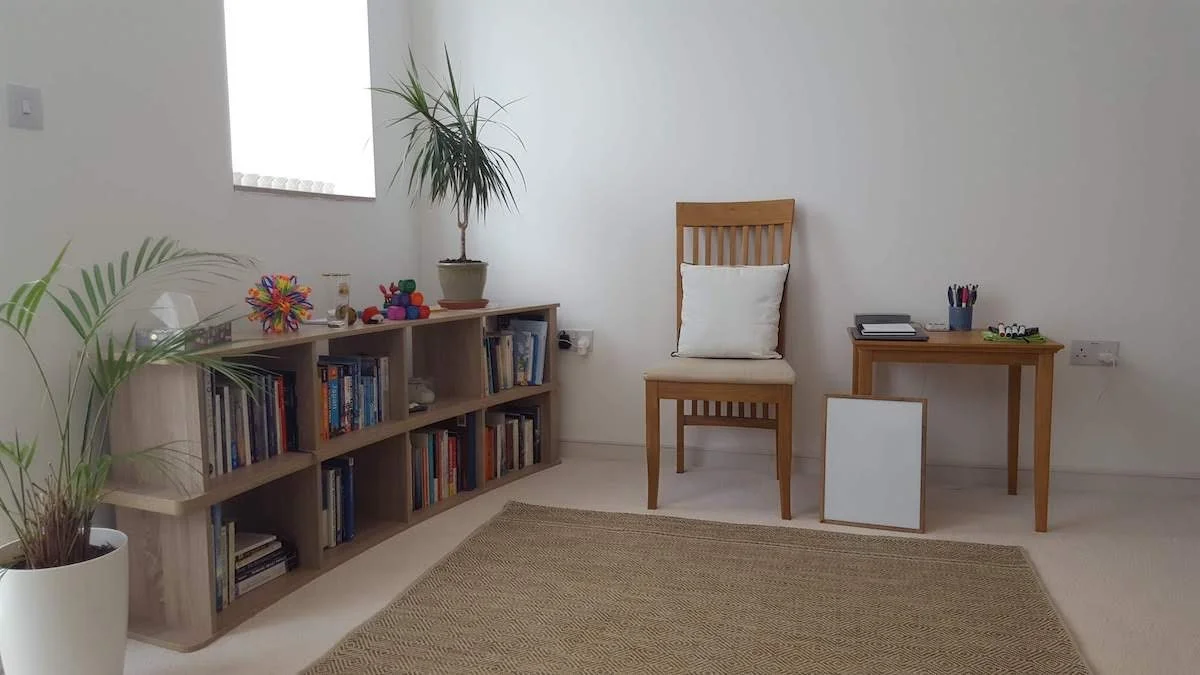
I see people face to face and online. My consulting rooms are calm, private and comfortable. Online sessions are equally effective.
You can see the layout of my practice in this video:
Book in for a chat or an appointment
Book a free chat with Adam, or if you’re ready to, schedule a session and start your journey towards greater levels of calm, confidence, clarity and control.
I look forward to speaking with you.

Your information will be used to respond to your enquiry and, if you become a client, to provide hypnotherapy services. Please read my Privacy policy.
About Adam
I trained with the Clifton Practice Hypnotherapy College in Bristol and I am accredited and supported by two excellent professional bodies. I believe hypnotherapy has a very important role in the future, and they support this.
My background is in youth development, management training, corporate strategy and organisational change.
I volunteer with The Wave Project, a brilliant charity helping young people to reduce anxiety and develop confidence through surfing.
You can see more about me on linkedin.
Adam describes his background, in a radio interview with PirateFM:

Follow online




Sign up for my Weekly Wave
Weekly thoughts and tips on calm, confidence, and clarity - straight to your inbox.
View previous editions here.